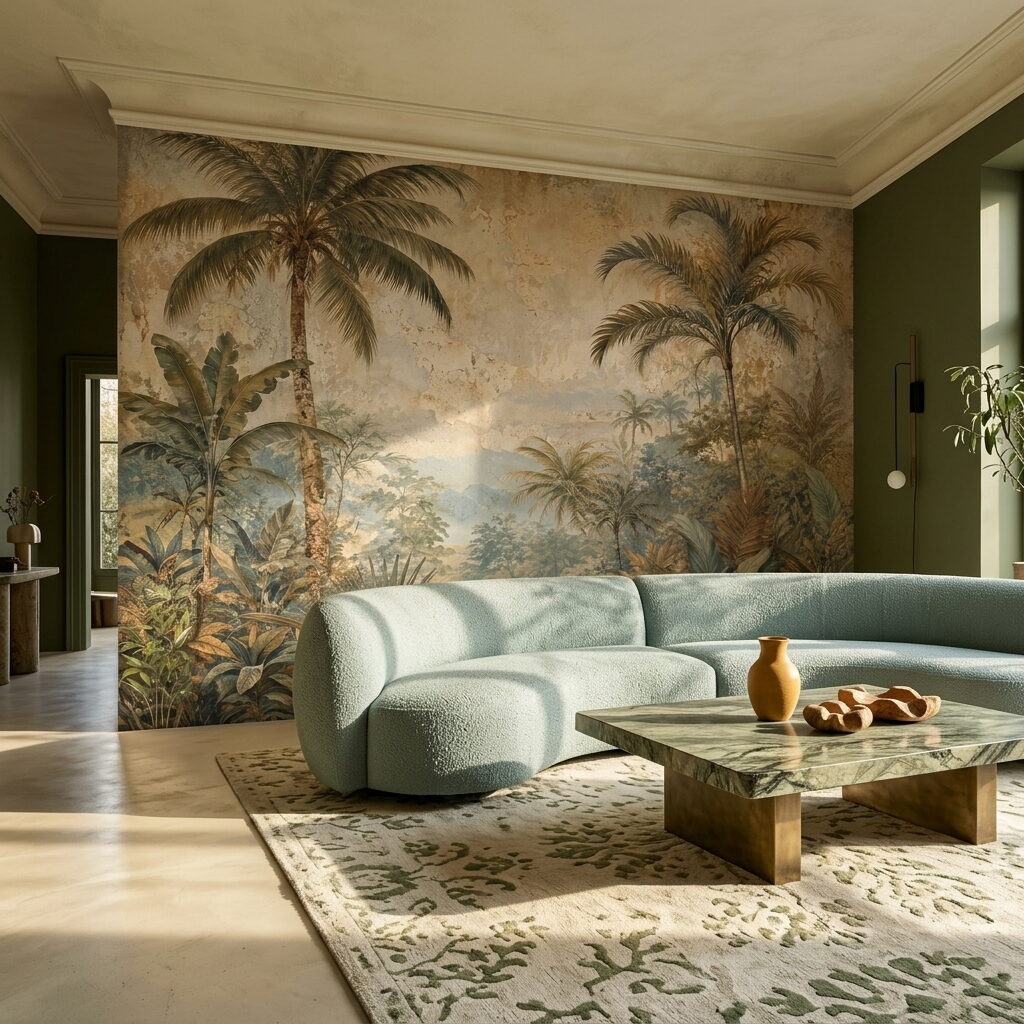
An accent wall works when one wall carries the pattern and the other three stay quiet enough to let it. The accent wall ideas below are organized by room, but the decisions behind them are the same everywhere: which wall to choose, how large the pattern should be for the distance you see it from, and how to color the walls around it. Every mural we make is printed after you order, scaled to your wall’s width and height, so the wall comes first and the design follows.
How to Pick the Accent Wall
If no wall stands out, go through these four checks in order.
The wall you see first
Stand in the doorway you use most and look straight ahead. That wall is usually the right one, because everyone who walks in sees it. The wall that holds the door is the weakest choice: you only face it on the way out, and the frame cuts into the design.
Behind the bed or sofa
Large furniture already pulls the eye to one wall, and a mural gives it a backdrop. Plan for what the furniture hides. A sofa back covers roughly the bottom 30 to 36 inches of the wall, and a tall headboard can cover 4 feet or more, so the part of the design you care about should sit above that line.
The TV wall
In many living rooms the TV wall becomes the focal point by default. A mural around the screen makes the black rectangle part of a larger picture. Choose an all-over pattern here rather than a scene with one central subject, because the TV will cover the middle of the design.
A wall with no windows
Windows, doors, vents and thermostats all cut into a mural. A blank wall keeps the design whole, and because it faces the daylight instead of being backlit by it, the colors read true during the day. A narrow wall between two windows can take a tall design, but a wide scene loses most of its picture there.
Pattern Scale, Room Size and Viewing Distance
Scale is where most accent walls go wrong. A pattern is read from a distance, and that distance changes from room to room. Large motifs need space to step back from; small motifs blur into texture a few yards away.
Because each mural is printed to fit your wall, the motifs grow and shrink with it. The same peony design comes out noticeably larger on a 14 foot wall than on an 8 foot wall. If a design would be too large or too small at your size, we can crop it or shift the framing before printing. Our guide on how to choose a wallpaper mural covers the design side in more detail.
| How far away you usually see it | Typical rooms | Scale that reads well |
|---|---|---|
| 10 feet or more | Living room, open plan space | Large motifs: single flowers or trees several feet across, wide landscapes |
| 6 to 10 feet | Bedroom, dining room, home office | Medium scale: scenes with a horizon, groups of trees or flowers |
| Under 5 feet | Hallway, entry, small study | Finer detail and smaller motifs, nothing you need to step back to understand |
| Close up, often from below | Nursery, kids room | Simple shapes with space around them and soft contrast |
With landscape murals, the horizon or waterline looks most natural near eye level: around 40 to 48 inches from the floor where people sit, as in a living or dining room, and around 60 inches where they stand, as in a hallway. If it lands much higher or lower at your wall height, ask us to adjust the crop.
Color Relative to the Other Walls
The mural sets the palette, and the other walls take their color from it.
- Match the background, not the highlight. Most murals have a ground color, such as the cream behind a palm scene or the charcoal behind dense leaves. Paint the other walls a lighter or muted version of it and the mural looks like part of the room. Use the brightest accent color instead and the two compete.
- Watch your whites. A cold, bright white beside a cream or sepia mural makes the mural look dirty. Use a warm off-white or a pale tint of one of its colors.
- Dark murals have two good options. Keep the other walls light so the mural reads as one strong block, or paint the side walls and ceiling a deep color pulled from the mural so the room closes in around it. The second suits bedrooms and small dens.
- Trim and textiles count too. Curtains, cushions or painted trim in one of the mural’s colors tie a room together quickly. The living room and hallway examples below both do this.
- Check the light. North light is cool and makes greens and greys look colder; south and west light warm everything in the afternoon. Judge the room at the time of day you use it most.
Accent Wall Ideas by Room
Each example shows one of our murals in a room setting, with notes on why the wall works.
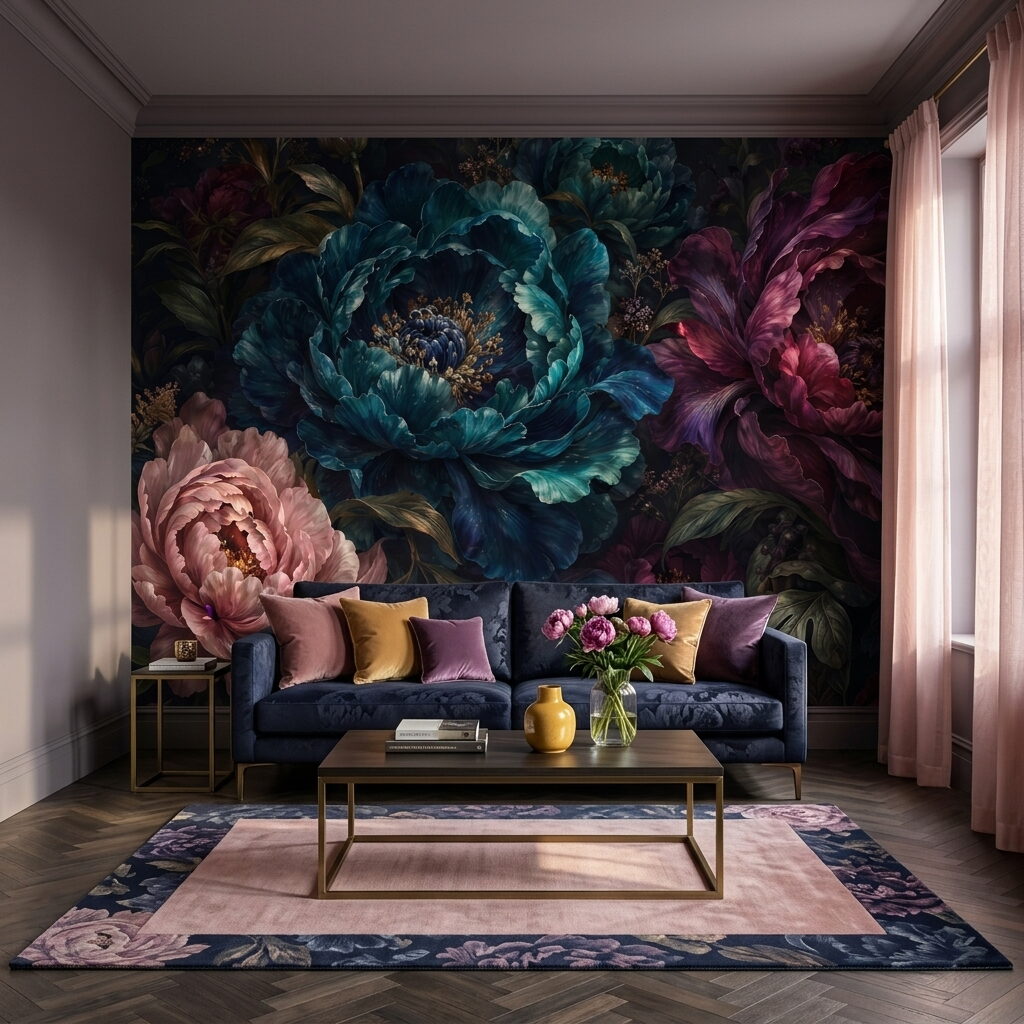
1. Living room accent wall: giant florals behind the sofa
This sofa wall has no windows and daylight comes from the side, so the nearly black background stays deep instead of washing out. Peonies several feet across read clearly from the far end of the room, and the big blooms sit above the sofa back.
The pink of the curtains and rug comes from the mural while the side walls stay pale grey. More layouts are in our living room wallpaper ideas and the living room wallpaper mural collection.
Shown: Giant Peonies Wallpaper Mural Dark Teal Pink Purple Floral
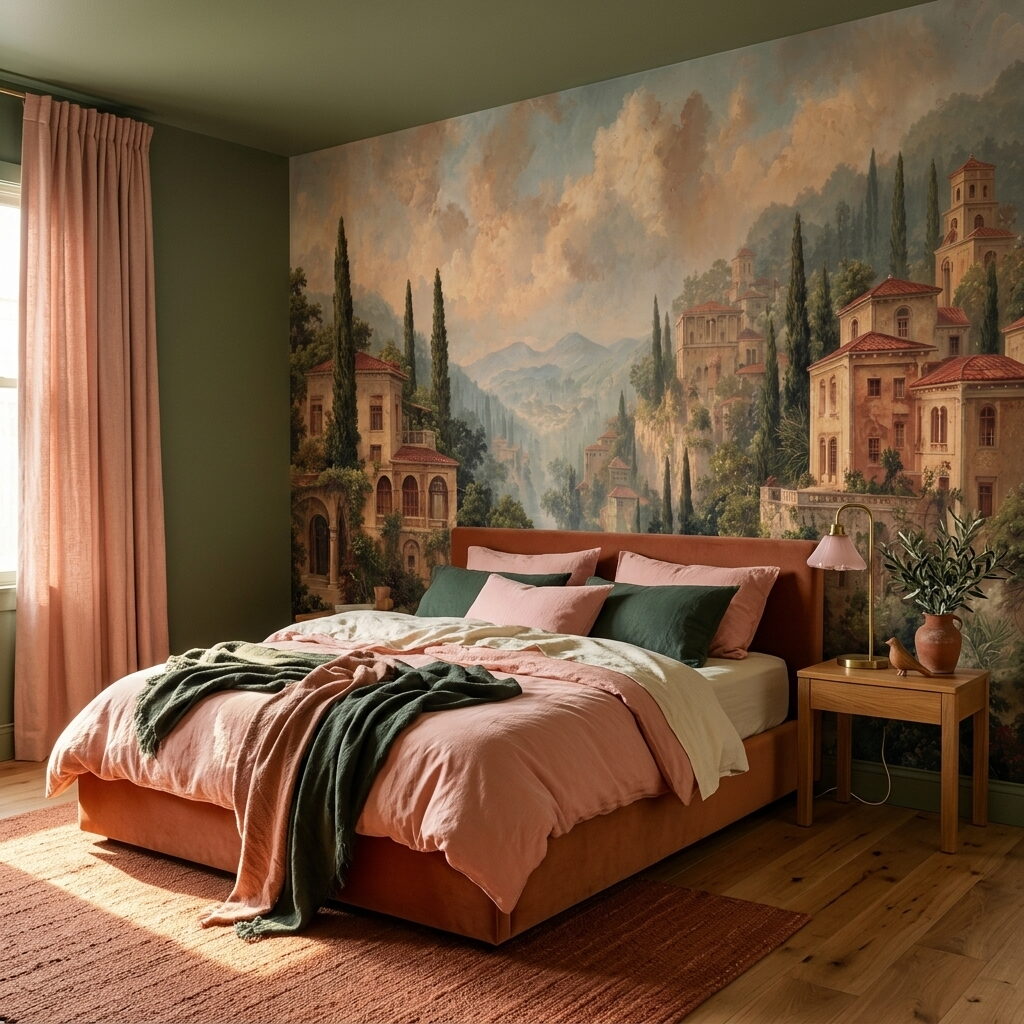
2. Bedroom accent wall: a landscape above the headboard
A landscape suits the wall behind the bed because the sky and the hilltop town sit above the headboard, where they stay visible. Here the side wall and ceiling are painted the olive of the cypresses, so the room reads as one palette instead of one busy wall and three plain ones.
From the bed, though, you look at the opposite wall. If you would rather wake up to the view, put the mural there. More designs are in the bedroom wallpaper mural collection.
Shown: Italian Town Wallpaper Mural River Cypresses Landscape
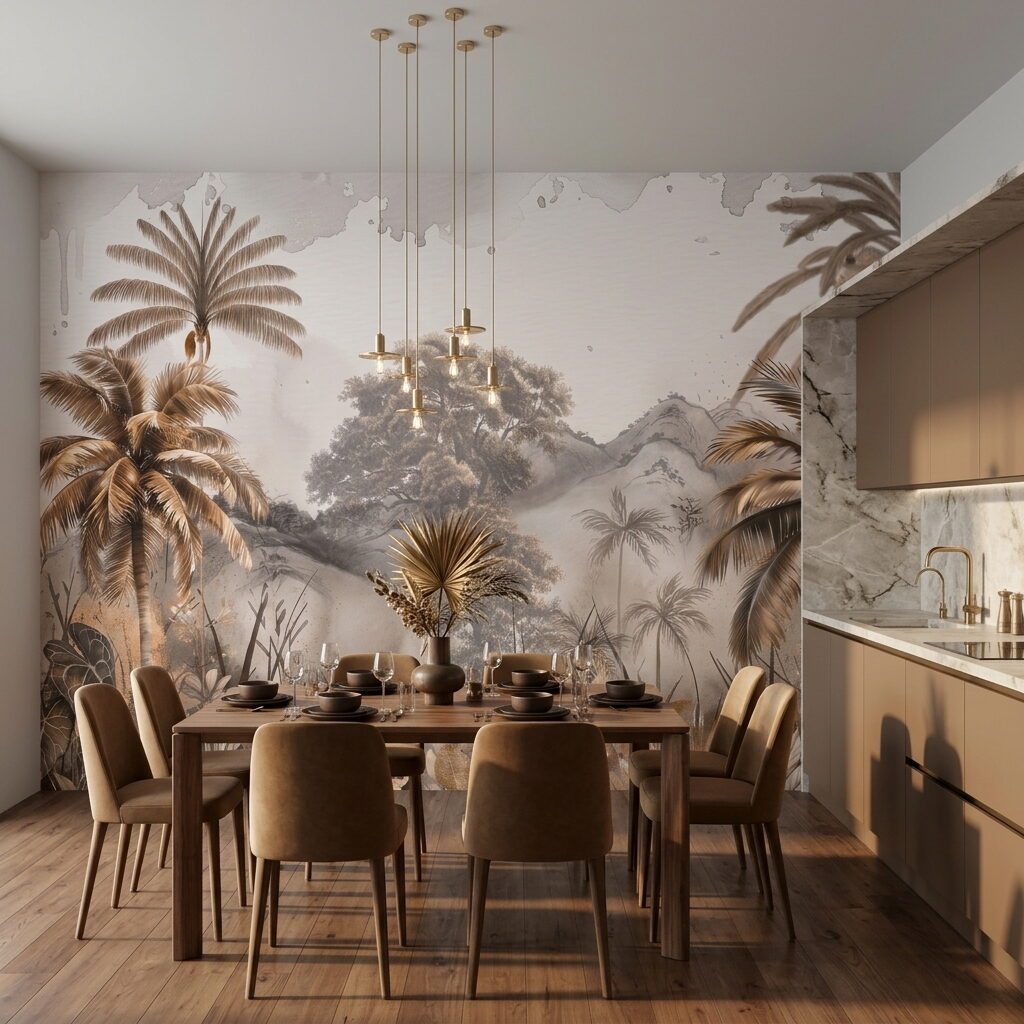
3. Dining room accent wall: a near monochrome scene with wood
A dining room is seen from a chair at roughly 4 to 8 feet, so a medium scale scene works. This sepia palm mural keeps to beige and brown with soft grey mist, so the wood table and tan chairs match it, and the pendants hang in front of the misty tree at its center.
In an open kitchen the mural also marks where the dining area starts. Keep it away from the stove and sink backsplash. Browse the dining room wallpaper mural collection.
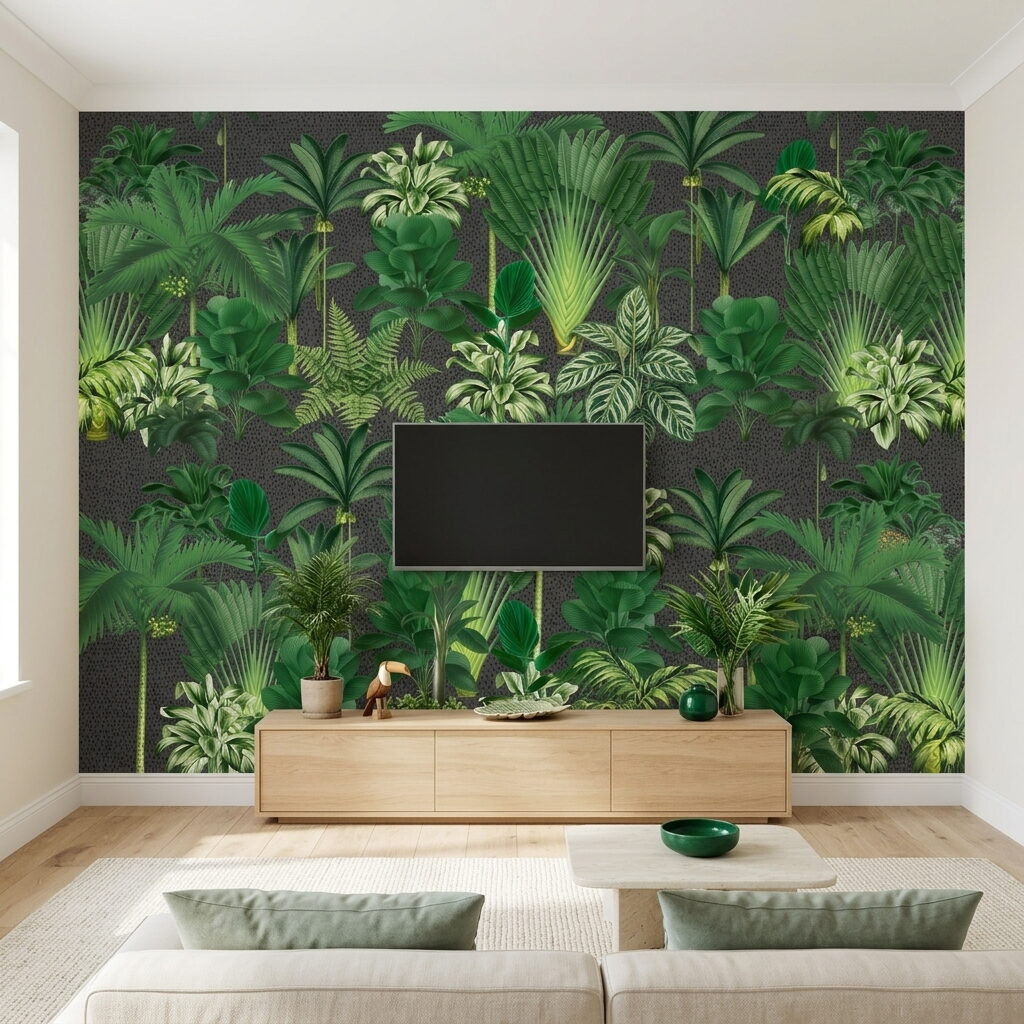
4. TV accent wall: an all-over pattern on a dark ground
A switched off TV is a black rectangle. On a charcoal background it almost disappears; on a white wall it is the first thing you notice. This palm pattern has no single focal point, so nothing important is lost behind the screen.
Mark the bracket position before you order to see which part of the design the TV will cover, and mount it after the mural is up. A low console hides less of the pattern. See the TV wall wallpaper mural collection.
Shown: Tropical Palms Wallpaper Mural Dark Charcoal Botanical
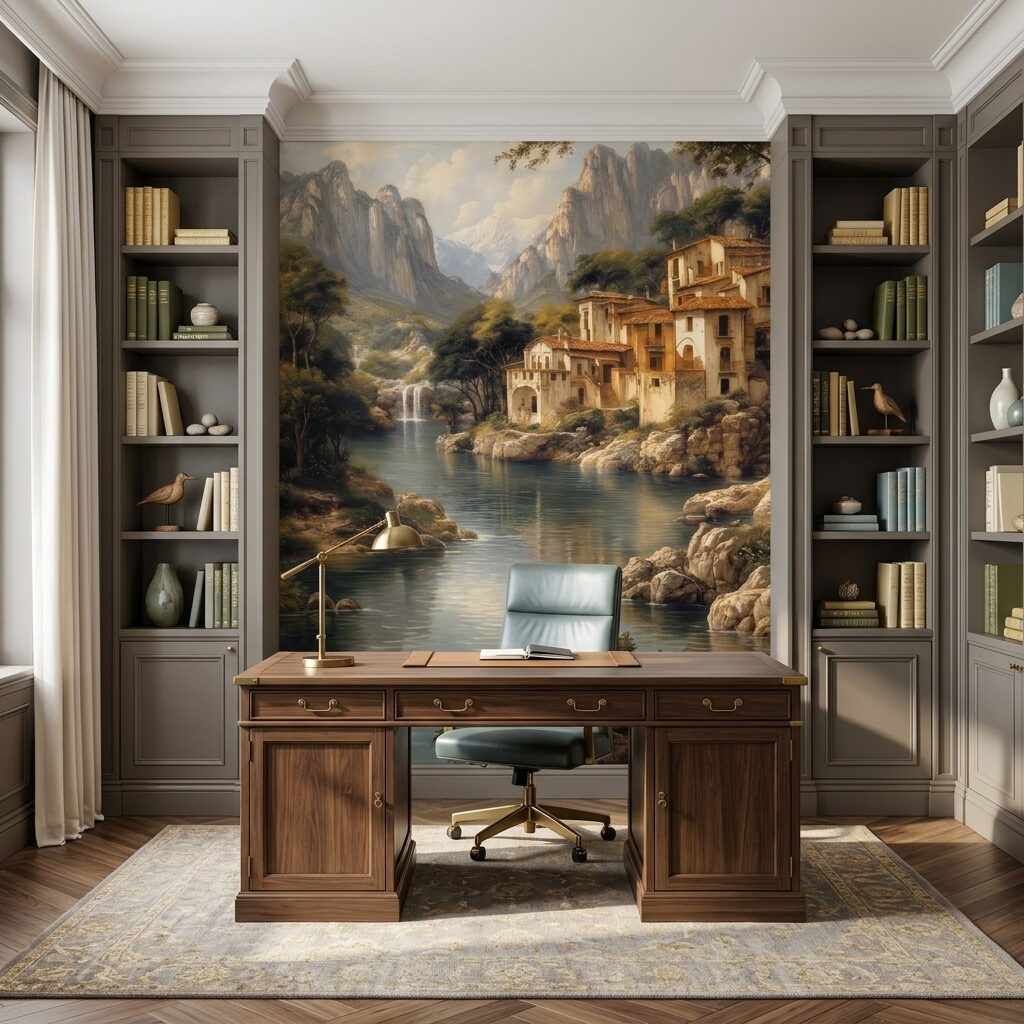
5. Home office: the wall behind your desk
Decide first which way you will face. With the desk turned toward the room, as here, the mural becomes the background on every video call, and a river with distant mountains gives the frame depth.
Built-in shelves on both sides turn the mural into a framed picture. Measure the opening between them, not the full wall. Browse the office wallpaper mural collection.
Shown: River Village Wallpaper Mural Mountain Waterfall Landscape
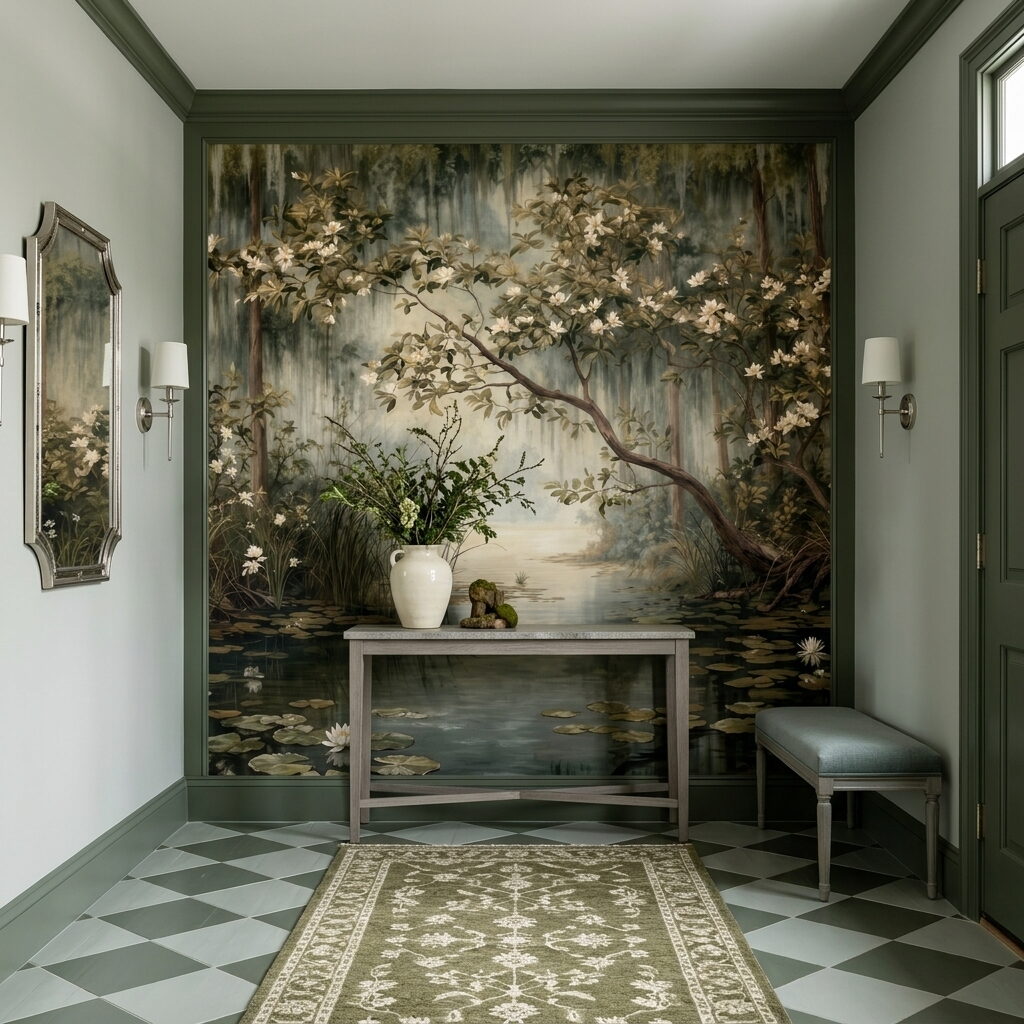
6. Hallway: the end wall of the entry
Hallway side walls are seen from a step away and only in pieces. The end wall is the one you walk toward, so the mural goes there, and it makes a long hall feel shorter because the eye stops on it. This misty pond scene has fine detail that holds up at close range.
The dark green trim repeats the darkest shade in the mural, and a console table about 30 inches tall gives the bottom of the design something to sit behind. See the hallway wallpaper mural collection.
Shown: Misty Swamp Wallpaper Mural Water Lilies Flowering Tree
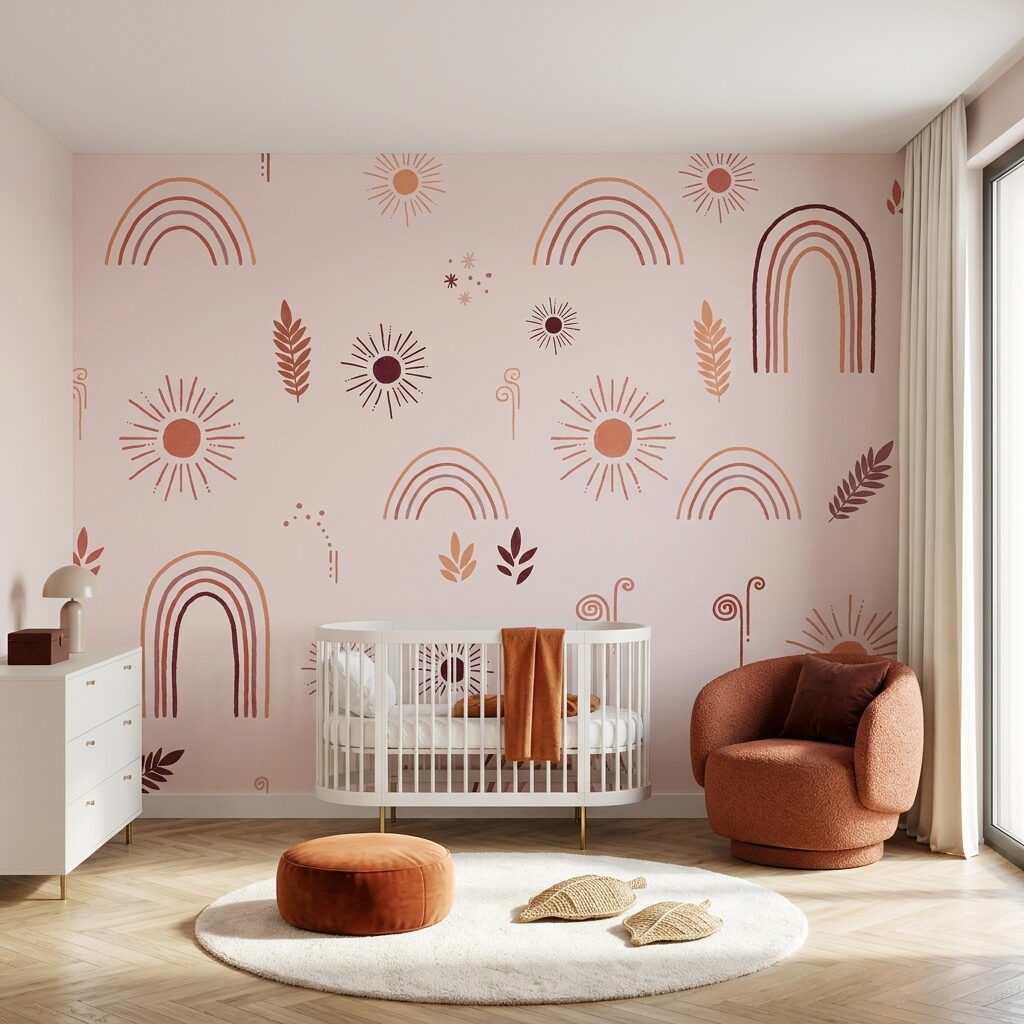
7. Nursery accent wall: small motifs with space around them
A nursery wall is seen up close and often from below. Small, widely spaced rainbows and suns on blush pink keep the wall calm. Leave the area above the crib free of shelves and frames.
Our murals are printed with water-based HP Latex inks. Peel and Stick Fabric Canvas comes off a sound, fully cured painted wall without residue when the child outgrows the design; test a hidden corner first. More in our kids room wallpaper ideas and the kids room wallpaper mural collection.
Shown: Boho Suns Wallpaper Mural Rainbows Blush Pink Kids Room
Common Accent Wall Mistakes
- Choosing the wall with the most interruptions. Two windows and a door leave you with scraps of a design. Pick the calmest wall, even if it is not the largest.
- Forgetting what the furniture covers. Check where the main subject of the design lands at your wall size before you order.
- The wrong scale for the distance. A small pattern on a big living room wall reads as texture from the sofa; a giant motif in a narrow hall is never seen whole.
- Two accent walls in one room. A mural plus a second wall in a strong paint color compete. One wall carries the pattern and the rest support it.
- Cold white next to a warm mural. Match the other walls to the mural’s background tone, not to the ceiling white.
- Peel and stick on fresh paint or heavy texture. Self-adhesive canvas needs a smooth wall and paint that has cured for 2 to 3 weeks. If your wall is heavily textured, smooth it first or ask us which material fits.
Renting? Read our renter friendly wallpaper guide before you choose a material.
Ordering to Your Exact Wall Size
Every mural we sell is printed after you order, scaled to the width and height you give us, so the measurement matters more than anything else in this guide. Measure the full wall edge to edge, including the parts that will sit behind furniture, and follow our wall measuring guide before you order. Then choose the material:
- Peel and Stick Fabric Canvas: self-adhesive woven canvas in 40 inch panels, no glue, repositionable while you install. It needs a smooth wall; see our peel and stick wallpaper guide.
- Seamless Fabric Wall Mural: one piece of woven textile made to your full wall width and hung with wallpaper glue, with no seams running through the design.
- Non-Woven Wallpaper: paste-the-wall paper in 40 inch panels. The glue goes on the wall, the paper stays dry and keeps its size. See how to hang wallpaper.
For adjusted colors, a different crop or your own photo, send us your wall size on WhatsApp. Shipping is free worldwide. Orders leave our Istanbul workshop within 2 business days and reach the US and Canada 3 to 10 business days after dispatch. Finished walls are in our customer photos.
Frequently Asked Questions
Which wall should be the accent wall in a room?
Usually the wall you face when you walk in, or the wall behind the bed or sofa. Choose the one with the fewest windows and doors so the design stays whole.
Should an accent wall be darker or lighter than the other walls?
Either works. What matters is that the other walls take their color from the mural, usually a lighter or muted version of its background color.
Can a small room have a wallpaper accent wall?
Yes. Keep the pattern at medium or small scale, pick a design with some depth such as a landscape, and keep the other walls plain.
How do I size a wallpaper mural for an accent wall?
Measure the full width and height of the wall in three places each and use the largest figures. We print each mural to those measurements, so it is made for your wall rather than cut from a standard roll.
Can I remove a peel and stick accent wall later?
Peel and Stick Fabric Canvas comes off without residue from a sound, fully cured painted wall. Test a hidden corner first, and avoid fresh paint and heavily textured walls.

