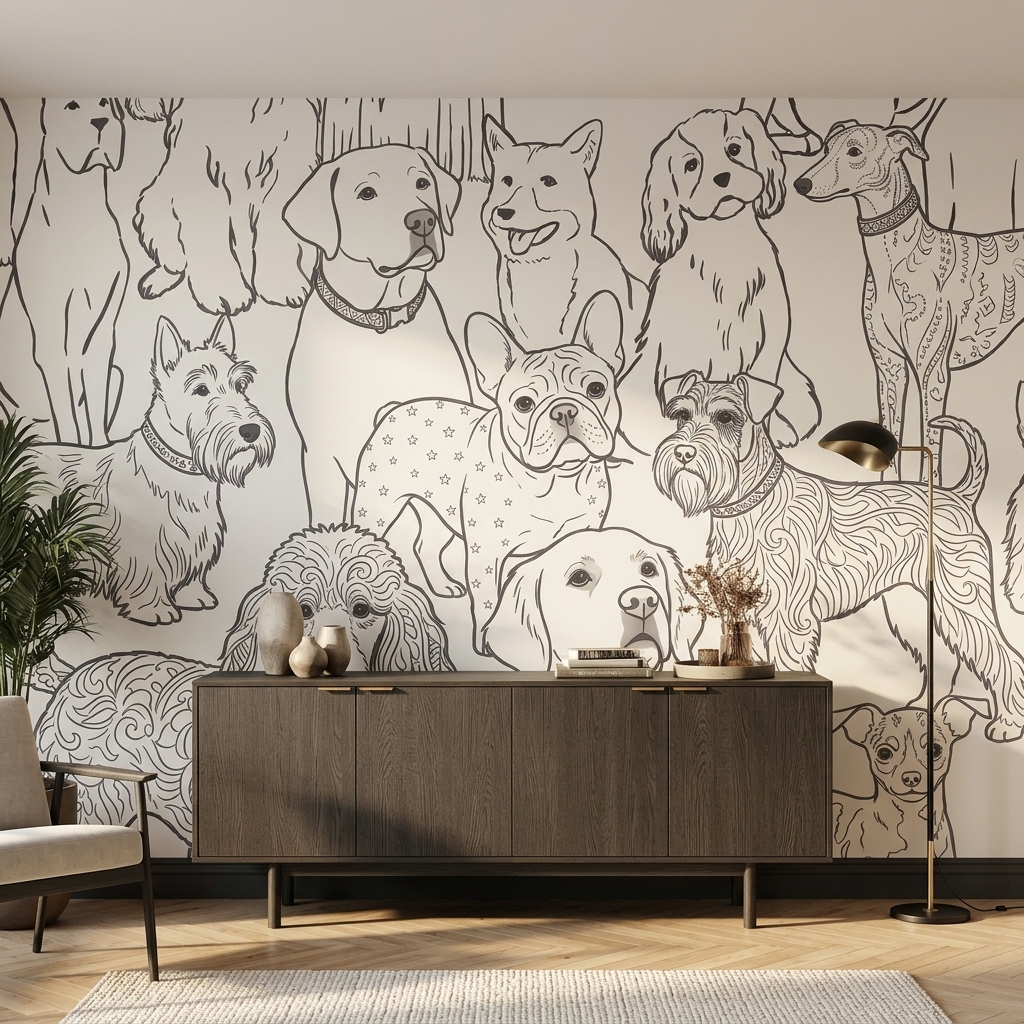
Removing old wallpaper is the least fun part of redecorating, so it is tempting to cover it. Sometimes that works; often it does not. Here is how to decide.
The Short Answer
A peel and stick mural can go over existing wallpaper only if the old paper is smooth, firmly attached and not textured or vinyl coated. In most other cases, removing the old paper and priming the wall gives a much better and longer lasting result.
| Existing wallpaper | Apply over it? |
|---|---|
| Smooth, flat, well bonded paper | Usually yes, after a test panel |
| Textured or embossed paper | No, the texture shows through |
| Vinyl or glossy coated paper | No, adhesion is weak |
| Peeling seams or bubbles | No, it will lift with the new mural |

How to Test
Press a strip of masking tape firmly onto the old wallpaper and pull it off quickly. If the paper or its surface layer comes away, the new mural would pull it off too. Also run your hand across the wall: any bumps or seams you feel will show through the new panels.
If You Need to Remove the Old Paper
- Score the paper lightly and soak it with warm water.
- Scrape off the softened paper.
- Wash off old paste and let the wall dry fully.
- Fill, sand and apply a primer.
After priming or painting, wait three to four weeks so the surface is fully cured before applying a peel and stick mural.
Frequently Asked Questions
Can peel and stick wallpaper go over textured wallpaper?
No. The texture shows through and adhesion is poor. Remove the old paper first.
Will the old wallpaper pattern show through?
Our premium canvas has high opacity, so a light pattern underneath is usually hidden, but strong dark patterns or bumps can still be visible.
Do I need to prime the wall after removing old wallpaper?
Yes. A primer seals leftover paste and gives the new mural an even surface to stick to.
How can I test whether the old wallpaper is firm enough?
Press masking tape onto it and pull it off. If the paper or its top layer comes away, remove it before installing.

